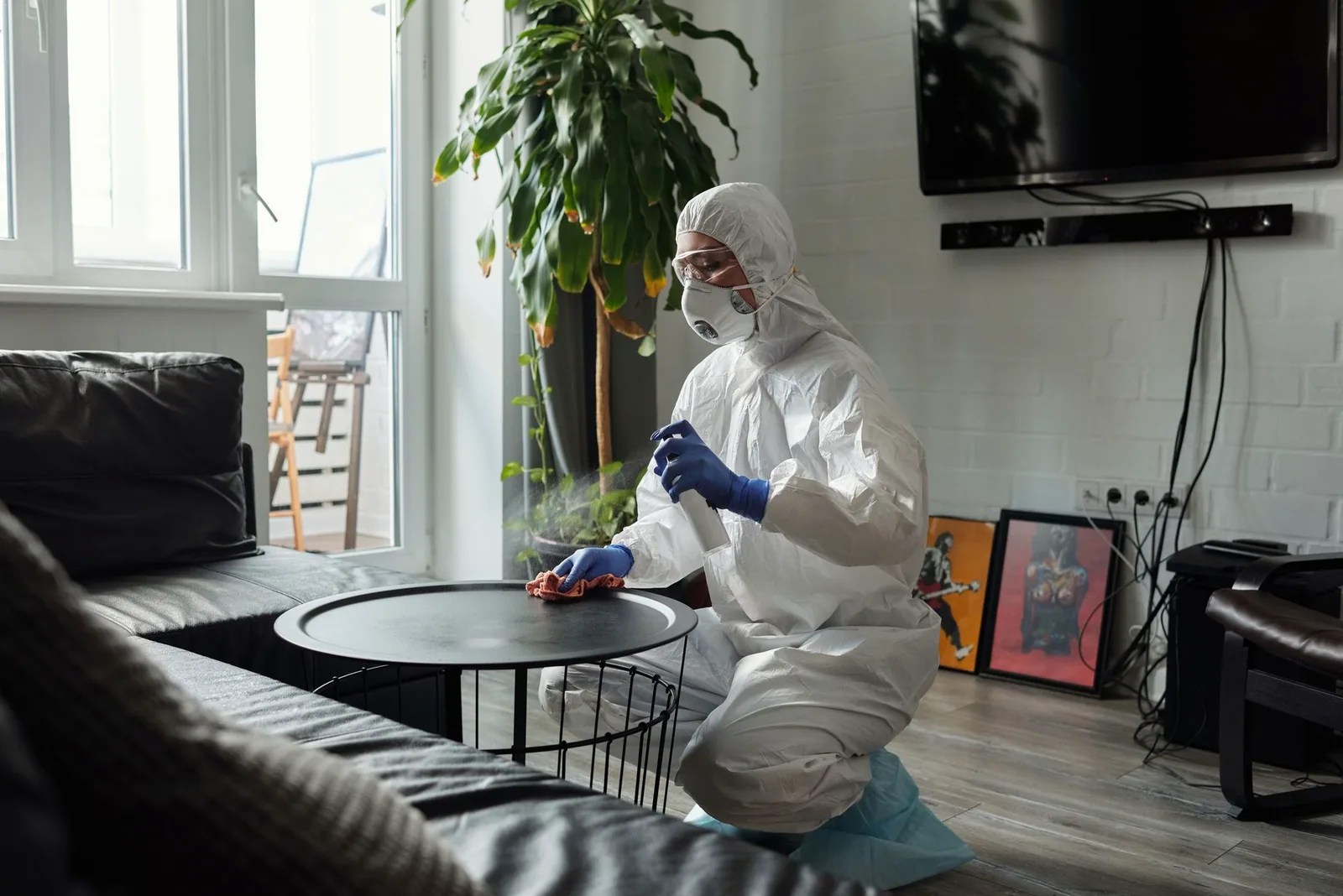
Mold remediation finds and fixes the moisture source, contains the area, removes affected material, and dries the space so mold does not return. Blue Sky Restoration in Livingston does it in the right order, because mold needs moisture to grow. Call (406) 222-7052 to have your mold problem looked at.
Mold does not appear out of nowhere. It needs moisture, and it usually means there is a water problem somewhere, a slow leak, a damp basement, or the leftover moisture from a water loss that was never fully dried. That is why cleaning the mold without fixing the water just brings it back.
Blue Sky Restoration is family owned in Livingston. We approach mold in the right order, find the moisture, contain the area, remove what is affected, and dry it out, so the problem is actually solved and not just wiped off the surface.
Mold needs moisture, so we start there
Every mold problem has a water source behind it. Before we remove any mold, we find and address the moisture feeding it, whether that is a leak, poor drainage, high humidity, or a spot that never dried after a water loss. If the water is not fixed, the mold comes back no matter how well we clean it.
This is the step people skip when they scrub mold with a spray bottle. It looks better for a while, then returns in the same place, because the moisture that grew it is still there.
| Condition | Why mold grows | What we do |
|---|---|---|
| Leak or water loss | Moisture left in materials | Fix the source, dry fully |
| Damp basement | Ongoing humidity | Address moisture, dry and monitor |
| Poor ventilation | Trapped humid air | Improve drying, reduce moisture |
| Condensation | Cold surfaces stay wet | Find and correct the moisture |
Containing the area before we remove anything
Disturbing mold releases spores into the air, and if the area is not contained, those spores spread to clean parts of the home. So before removal, we set up containment to keep the work area separate and keep spores from traveling through the house.
Contained removal protects the rest of your home and the air your family breathes. It is a basic step that makes the difference between solving a mold problem and spreading it around.
Removing affected material and drying it out
Once the area is contained, we remove the materials that mold has grown into, which for porous things like drywall and insulation usually means taking them out rather than trying to clean them. Non porous surfaces can often be cleaned. Then we dry the space thoroughly so the conditions that grew the mold are gone.
Drying is not an afterthought here. Since mold needs moisture, leaving any dampness behind invites it back. We monitor moisture until the readings are normal, the same as we do after a water loss.
Signs you may have a mold problem
- A musty smell in a room, closet, or basement
- Visible spots on walls, ceilings, or around windows
- Mold returning in the same place after cleaning
- A past leak or flood that was never fully dried
- Peeling paint, warped trim, or persistent dampness
- Worsening allergy type symptoms indoors
Mold that comes from a water loss
A lot of mold we see traces back to a water problem that was not fully dried. That is exactly why we push so hard on proper drying and moisture monitoring after any water damage. When a water loss is dried correctly the first time, the mold never gets started.
If you are seeing mold after a past leak or flood, there is a good chance moisture is still present. We will find it, address it, and remediate the mold together.
Keeping mold from coming back for good
The whole reason we start with the moisture is so the mold does not return. Once we have removed the affected material and dried the space, the lasting fix is making sure the water source that grew it is actually gone, whether that was a leak, drainage, or humidity.
We check the moisture with a meter before we call it done, and we will tell you what we found feeding the mold so it can be kept in check. Remediation that ignores the water only buys a little time. Handling the moisture is what makes the result hold.
Mold is one of those problems that rewards doing it thoroughly and punishes cutting corners, so we do it in the right order every time. Find the moisture, contain the area, remove what is affected, dry it out, and confirm it with a meter. That sequence is what turns a recurring problem into one that is genuinely solved.